
Scientific knowledge is the fruit of discoveries born of research and empirical observation. The danger arises when established knowledge comes to be treated as absolute and as a settled certainty.
Yesterday’s paradigms, once they become rigid, turn into counterproductive obstacles to new discoveries, new progress, and new knowledge.
Molecular biology is obviously no exception to this reality.
The “central dogma” of molecular biology
There was a time—not so long ago—when the flow of genetic information seemed to rest on an unquestionable truth: DNA directs, RNA conveys, protein executes. A fine mechanism: logical, orderly, reassuring. More than an idea, a certainty. A “central dogma,” as Francis Crick himself called it, the British biologist who first formulated it in 1958, and again in 1970 in Nature.
The problem, in science, is that reality has a stubborn streak: it often contradicts dogma…
Howard Temin’s hypothesis
In the 1960s, the American virologist Howard Temin observed RNA viruses capable of durably transforming cells. To explain this phenomenon, he put forward a bold hypothesis in 1964: these viruses must pass through a DNA intermediate that becomes integrated into the genome of the infected cell.
But certainty is a comfortably insidious poison. And Temin’s idea then seemed almost improper. Many researchers preferred, as a matter of principle, to remain on the side of commonly accepted explanations. The available evidence was judged weak, unconvincing. The hypothesis was too heretical in light of the central dogma.
Reverse transcriptase
Then came June 27, 1970. On that day, two papers were published in Nature.
The first was by David Baltimore, whose abstract reads as follows:
“Two independent research teams have provided evidence for the existence, in the virions of RNA tumor viruses, of an enzyme capable of synthesizing DNA from an RNA template. If confirmed, this discovery will have major consequences not only for the understanding of carcinogenesis linked to RNA viruses, but also for the general understanding of the mechanisms of genetic transcription: the classical scheme of information transfer from DNA to RNA might, at least in appearance, be reversed.”
The second was by Howard Temin and Satoshi Mizutani, in which the authors described the functioning of Rous sarcoma virus.
Both papers described a decisive enzymatic activity in RNA tumor viruses: a polymerase capable of synthesizing DNA from RNA. In other words, a bomb ready to blow apart Crick’s central dogma: in certain cases, genetic information can flow from RNA to DNA.
The enzyme in question was first called RNA-dependent DNA polymerase, and a little later, reverse transcriptase.
Reverse transcriptase had just entered the stage.
Reverse transcriptase and its consequences
It is important, however, to be precise and not… simplistic: strictly speaking, the discovery did not “destroy” Francis Crick’s central dogma, which in fact stated that sequential information does not pass from proteins to nucleic acids. What the discovery did shatter was its simplified, rigid, catechized version—the one that had turned a theoretical framework into a mandatory one-way street. The Nobel website, moreover, summarizes this quite clearly: the generally accepted rule according to which information flowed in only one direction had to be revised.
In other words, science had not been wrong. But it had run the risk of trapping itself in a comfortable cul-de-sac and missing a major discovery by refusing to question what it had taken to be an unshakable certainty.
Reverse transcriptase had major consequences.
It became possible, for example, to explain how a retrovirus does not merely use RNA, but converts it into DNA, which can then integrate into the genome of the host cell. The best-known example for the general public is perhaps HIV, the virus responsible for AIDS. It is classified as a retrovirus because it carries its genetic information in the form of RNA and uses reverse transcriptase to produce viral DNA, which can then integrate into the genome of the infected cell.
Reverse transcriptase also profoundly advanced research on oncogenic viruses and, more broadly, genome biology.
It became an everyday tool: converting RNA into complementary DNA, studying gene expression, RT-PCR, virological diagnostics, and on to contemporary RNA analysis methods. A discovery born from a breach in dogma ultimately became routine laboratory practice.
Howard Temin was awarded the Nobel Prize in Physiology or Medicine in 1975, together with David Baltimore and Renato Dulbecco.
In science, objectivity is the art of accepting that a solid fact may disturb a comfortable narrative.
Constructive doubt is not a methodological weakness; it is the very condition of progress. Genuine innovation does not arise against established science, but against its petrification. Every time knowledge becomes untouchable, it ceases to be fully scientific.
And every time a robust result forces the case to be reopened, science—far from collapsing—finally shows itself true to its own nature.
”
Frédéric FINACEO, SD & Co-Founder
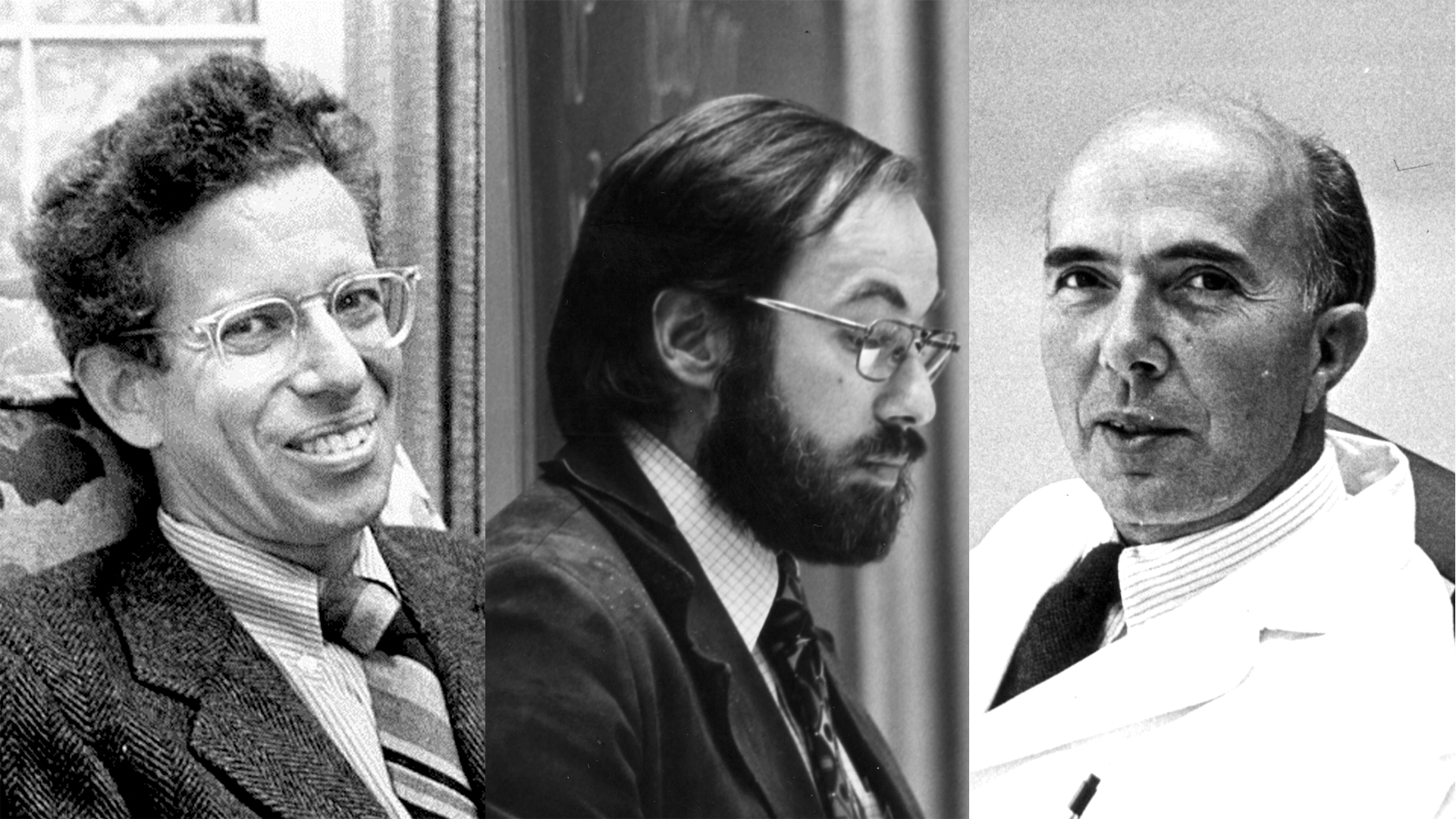
Temin, Baltimore et Dulbecco, Prix Nobel de Médecine 1975