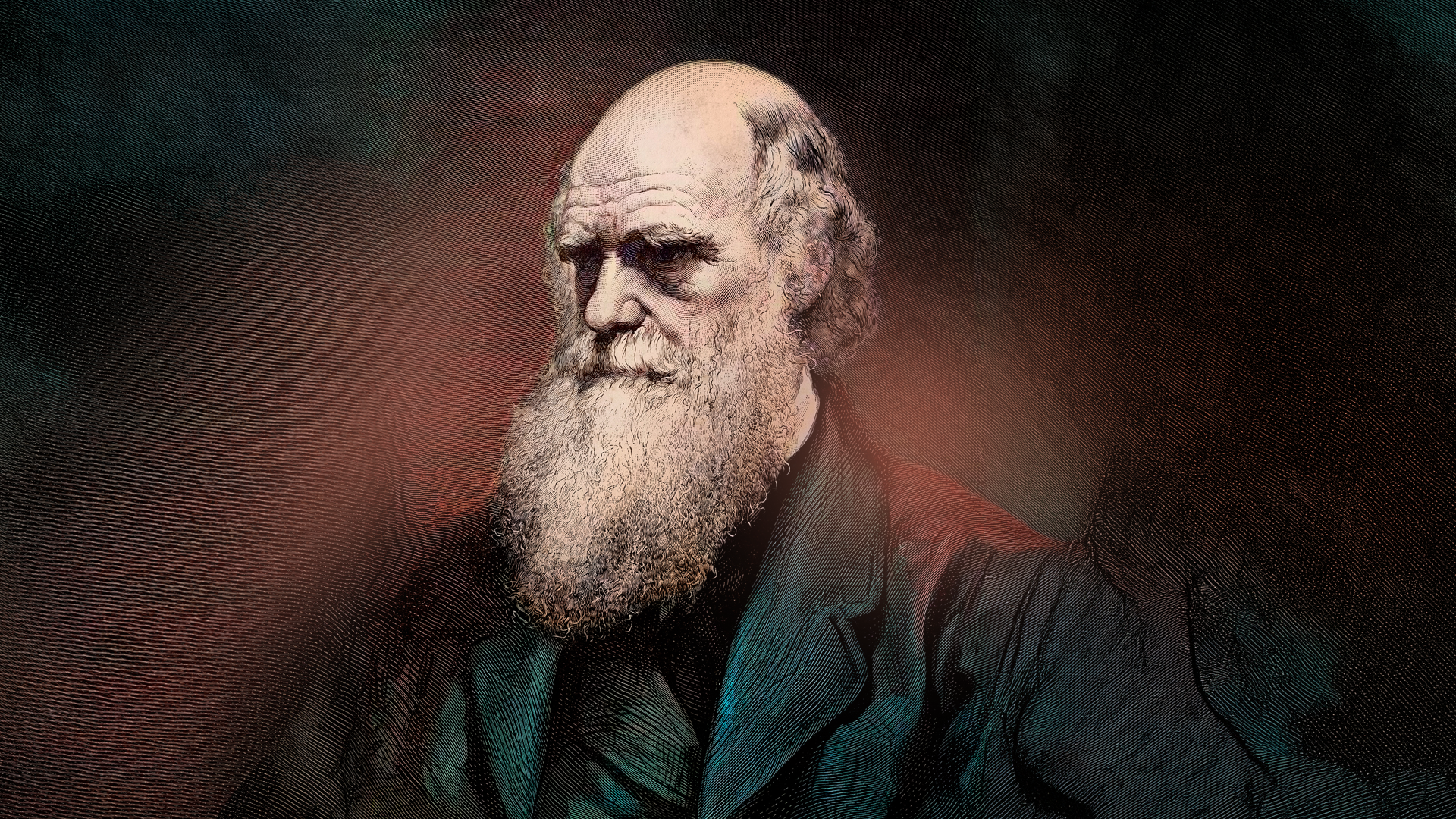

What if Darwin got it all wrong? On the train taking me to Paris that morning, I shut out the surrounding noise by rereading, with a certain pleasure, an article published two years earlier in Le Monde. Its title has lost none of its bite: “Natural selection should have eliminated girafes… what if Darwin got it all wrong?”
Beyond the provocative edge of that headline, I believe the underlying argument has lost none of its relevance.
It echoes an observation put forward by the philosopher Daniel Milo in an op-ed published very recently in Le Monde: namely, that a simplistic and unobjective interpretation, especially of a scientific theory, can lead to ideological biases in our vision of society, biases that may prove highly damaging in the long term.
Milo builds his argument on Darwin’s theory of evolution and on the notion of “natural selection,” which, through repeated oversimplification, has gradually become distorted in our collective thinking: in nature, the struggle is constant, only the strongest survive, and woe to the weak. According to Milo, this distorted interpretation has served as a backdrop justifying economic, geopolitical, and political approaches that more or less directly embrace the idea that “might makes right” must be the best law, since it supposedly derives from Nature itself. Viewed through the lens of our own time, the point is far from irrelevant.
Milo does not reject Darwin’s theory wholesale. What makes his approach interesting is that he subjects it to critical, objective scrutiny, drawing on the very example of the giraffe that Darwin himself uses in On the Origin of Species.
For the English scientist, the giraffe’s height, its disproportionately long neck, and the height of its relatively inflexible legs are the result of natural evolution. The giraffe’s ancestor “adapted” in order to reach leaves as high as possible.
Milo offers another perspective: an excessively long neck, legs that do not bend easily, difficult and dangerous calving, and so on. In terms of evolution and natural selection, one must admit that the giraffe is very far indeed from the “perfection” implied by Darwin regarding Mother Nature’s “choices” to favor or not favor a given biological “innovation.” And yet the giraffe is still here.
So then, did Darwin “get it all wrong,” as the article’s title suggests? What does Science say today, 167 years after the publication of On the Origin of Species? And what about the giraffe in all this? Milo offers us an answer that is, to say the least… surprising.
The train slows down. Paris. In less than an hour, I will be at GLOBAL INDUSTRIE 2026. Bpifrance has invited me to take part in this remarkable event, where the future is imagined and built through a rich variety of particularly eclectic approaches and worldviews.
Milo’s answer?
In my next post…
”
Frédéric FINAPrésident, Directeur Scientifique & Co-Fondateur de GENARO